Why Gold Bullion Is a Smart Investment and How to Sell It
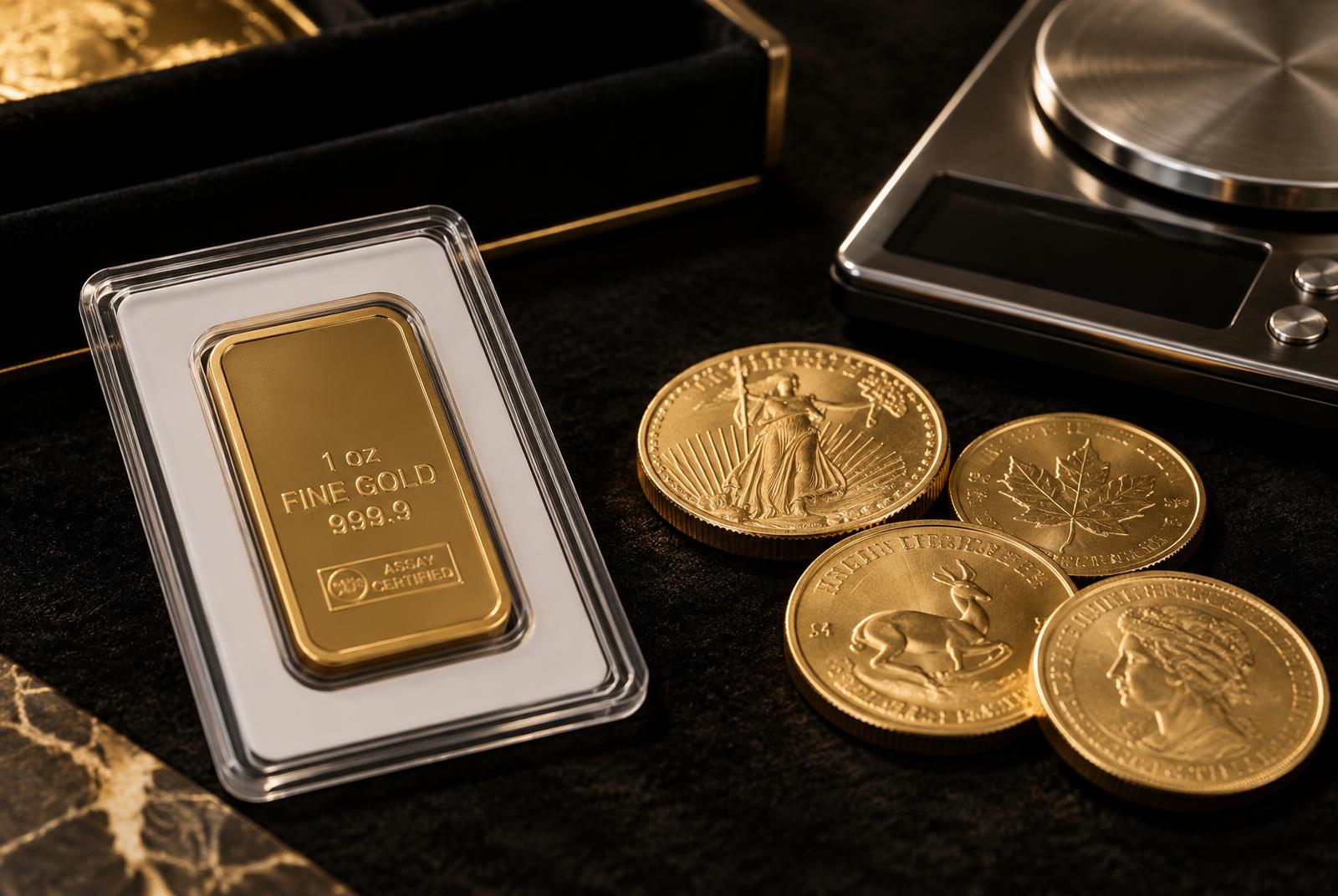
Gold bullion offers tangible ownership and portfolio diversification, but prices fluctuate. Learn how bars and coins are valued, authenticated and sold for cash.
Quick Answer: Is Gold Bullion a Smart Investment and How Do You Sell It?
Gold bullion can support a diversified portfolio because it provides direct ownership of a widely traded physical asset, but its price can fall and it pays no interest or dividends. Its suitability depends on your goals, time horizon, storage costs and risk tolerance.
To sell gold bullion, identify the bar or coin, preserve its assay card or original packaging, check the current spot price and request professional authentication. A buyer should explain how fine-gold weight, purity, product demand and the dealer spread affect the cash offer.
Golden Jewelers provides free, no-obligation evaluations for gold bars and bullion coins at 141 Route 130 South, Suite H, Cinnaminson, NJ, serving South Jersey and nearby Philadelphia seven days a week.
What Is Gold Bullion?
Gold bullion is investment-grade physical gold whose value is primarily determined by its weight, purity, and the prevailing market price of gold. It is commonly produced as bars, ingots, rounds, and government-issued bullion coins.
Bullion should not automatically be confused with collectible or numismatic coins.
A bullion coin is generally purchased mainly for the precious metal it contains. A rare collectible coin, on the other hand, may derive a substantial portion of its value from scarcity, condition, historical significance, year, mint mark, and collector demand.
The U.S. Mint explains that bullion coins are valued according to their weight in a specific precious metal, with government-issued U.S. bullion coins carrying guarantees regarding weight, content, and purity.
Common forms of physical gold include:
Understanding what you own is important because selling gold coins may require a different evaluation from selling a standard investment-grade gold bar.
- Minted and cast gold bars
- Gold ingots and rounds
- American Gold Eagle and American Buffalo coins
- Canadian Maple Leaf and other recognized bullion coins
Why Is Gold Bullion Considered a Smart Investment?
Gold bullion can make sense for certain investors because it provides direct ownership of a tangible commodity, can contribute to portfolio diversification, and has a widely recognized global market.
That does not mean gold is appropriate for every investor.
The CFTC cautions gold investors that precious-metal prices can be volatile and that past performance does not guarantee future returns.
The better question, therefore, is not simply, “Is gold a good investment?” but:
Does an investment in gold fit your financial objectives, risk tolerance, time horizon, and overall asset allocation?
Here are some of the reasons investors consider bullion.
1. Gold Provides Direct Ownership of a Physical Asset
Buying physical bullion means owning an actual tangible asset rather than only a financial claim on an underlying investment.
A physical gold bar does not depend on the operating performance of a particular company. Its market value is instead connected primarily to gold itself.
This characteristic is one reason some investors include physical precious metals alongside conventional assets.
2. Gold Can Help Diversify a Portfolio
Diversification means spreading investments among different assets rather than concentrating everything in one place.
Gold is a commodity, so its price may respond differently from stocks and bonds to certain economic developments.
According to FINRA's guidance on commodities, commodities can contribute to portfolio diversification, although they may not be suitable for every investor.
Gold should therefore generally be considered as one possible component of a broader investment strategy rather than an automatic replacement for diversified investments.
3. Gold Has a Widely Recognized Market
Gold is traded internationally and has established markets involving investors, financial institutions, refiners, mints, wholesalers, and precious-metal dealers.
Recognized bullion products can consequently be relatively straightforward for knowledgeable dealers to identify and evaluate.
That can be valuable when an investor eventually decides to turn physical gold into cash.
4. Bullion Is Relatively Simple to Value
A major advantage of investment-grade bullion is that its underlying metal value can be estimated using a relatively straightforward calculation:
Gold content × current gold price = approximate underlying metal value
For example, if someone owns a one-troy-ounce bar containing one troy ounce of fine gold, the current market price per troy ounce provides a useful starting point for understanding its metal value.
The amount a dealer actually offers can differ from spot because spreads, product demand, verification, refining considerations, and other market factors may affect the transaction.
5. Physical Gold Does Not Require a Company to Generate Earnings
Stocks represent ownership interests in businesses. Bonds generally involve debt obligations. Physical bullion is different.
Gold does not generate corporate earnings, dividends, or interest by itself. Instead, investors rely primarily on changes in the market value of gold.
This can be both an advantage and a limitation.
The asset is not dependent on one company's profitability, but investors should also remember that simply holding physical gold does not produce recurring income.
Gold Bullion vs. Other Gold Investments: Which Is Different?
People searching for a gold investment in NJ may encounter several ways to gain exposure to gold.
The differences are important.
Investors interested specifically in tangible ownership often choose bullion bars or coins.
Investors prioritizing convenience may prefer financial products offering gold exposure without personally storing metal.
Neither approach is universally superior. The appropriate choice depends on the investor's objectives and risk profile.
What Determines Gold Bullion Market Value?
The gold market value of bullion begins with the market price of gold, but several additional factors can influence the price a buyer is willing to pay.
Current Spot Price of Gold
The spot price is the current cash-market benchmark for gold and is generally quoted per troy ounce.
It changes as global markets react to supply and demand, currency movements, economic expectations, investor activity, and geopolitical developments.
Because the market changes, an offer made today may not be identical to an offer made at another time.
Weight
Bullion products are commonly marked with their weight.
Examples include:
Always distinguish between an ordinary ounce and a troy ounce, because precious metals are conventionally measured using troy weight.
One troy ounce equals approximately 31.1035 grams.
- 1 gram
- 5 grams
- 10 grams
- 20 grams
- 1 troy ounce
- 50 grams
- 100 grams
- Larger investment bars
Purity
Investment-grade gold bullion commonly has very high purity.
For example, a bar marked 999.9 indicates approximately 99.99% fine gold.
Purity matters because two objects of identical gross weight can contain different quantities of actual gold.
Manufacturer or Mint
Recognizable bars and coins from established mints and refiners may be easier for the secondary market to identify and trade.
Government-issued bullion coins can also have established market demand.
The U.S. Mint bullion program includes American Eagle and American Buffalo bullion products and explains how bullion coins reach investors through a network of distributors and dealers.
Product Demand
Two products containing the same amount of fine gold do not necessarily trade for exactly the same amount.
Market demand, availability, manufacturer, coin type, condition, and dealer inventory can influence premiums and buyback prices.
What Is the Difference Between Spot Price, Premium, and Dealer Spread?
Understanding these three terms is essential when you buy and sell gold bullion.
When purchasing physical bullion, investors normally pay more than the underlying spot value because manufacturing, minting, distribution, insurance, dealer costs, and market demand can contribute to premiums.
When selling, a buyer may offer below the retail selling price.
The CFTC's physical precious-metals guidance recommends understanding both spot price and dealer spread before buying physical metals.
A Simple Example
Suppose an investor purchases a gold bullion product when the underlying gold value is $3,000.
For illustration only:
If the investor immediately sells the bullion, the resale offer may not equal $3,120.
Why?
Because the retail purchase premium is not necessarily recoverable, and the buyer must account for the market, resale spread, product demand, verification, and other transaction factors.
This is why bullion is generally better understood as an investment asset rather than a guaranteed short-term flip.
- Underlying metal value: $3,000
- Purchase price after premium: $3,120
- Difference: $120
Is a Gold Bar Better Than a Gold Coin for Investment?
Neither is automatically better.
Gold bars often appeal to investors primarily interested in maximizing the amount of gold acquired for their money, while recognized bullion coins may appeal to people who value portability, smaller denominations, and established retail demand.
Before buying either, compare the total price with the underlying gold value rather than looking only at the advertised product price.
When Is the Best Time to Sell Gold Bullion?
There is no universally perfect time to sell gold bullion.
The right time depends on the current gold price, your original acquisition cost, transaction costs, personal financial needs, investment goals, and whether selling fits your broader financial plan.
Consider asking yourself:
Investors should avoid assuming that gold prices will inevitably continue rising.
All investments involve risk, and FINRA emphasizes understanding and managing investment risk rather than assuming losses can be eliminated.
- What is gold trading for today?
- How much fine gold do I own?
- What did I originally pay?
- What premium did I pay when buying?
- What price is a buyer offering?
- Do I need liquidity now?
- Would selling support my financial objectives?
- Am I reacting emotionally to a short-term market movement?
How Do You Sell Gold Bullion for Cash?
Selling gold bullion generally involves identifying the product, confirming its weight and purity, checking current market conditions, having it authenticated, receiving an offer, and deciding whether to accept it.
For people considering selling gold bullion, the following process can make the transaction more transparent.
Step 1: Identify Exactly What You Own
Before visiting a buyer, record the information printed or stamped on the bullion.
Look for:
Do not worry if you do not understand every marking. A professional evaluator can inspect the item.
- Manufacturer or mint
- Weight
- Purity/fineness
- Serial number, if present
- Original packaging
- Assay card or certificate
- Coin denomination and year
Step 2: Research the Current Gold Price
Check the current gold market before requesting an offer.
This gives you a benchmark for understanding the approximate underlying metal value of your bullion.
Remember that spot price is not automatically the exact amount a dealer will pay.
Step 3: Keep Original Packaging and Documentation
If your gold bar came in tamper-evident assay packaging, avoid opening it unnecessarily.
Keep available:
Documentation does not replace professional authentication, but it can provide useful information about the product.
- Assay cards
- Purchase receipts
- Certificates
- Original mint packaging
Step 4: Visit a Reputable Gold Bullion Buyer
Choose an established buyer who clearly explains how bullion is evaluated.
If you're in South Jersey or the Philadelphia area, Golden Jewelers provides professional gold bullion buying services with free, no-obligation evaluations.
Step 5: Let the Buyer Authenticate the Bullion
Professional evaluation can consider:
The exact testing method depends on the item.
- Weight
- Dimensions
- Purity
- Manufacturer
- Hallmarks
- Serial numbers
- Packaging
- Authenticity indicators
- Current market value
Step 6: Review the Offer Before Selling
A transparent buyer should allow you to understand the offer before you decide.
You should never feel forced to sell simply because an evaluation has been completed.
Golden Jewelers states that its evaluations are free and no-obligation, allowing sellers to consider an offer before deciding whether to proceed.
How Is the Cash Value of a Gold Bar Calculated?
A simplified starting calculation is:
Fine gold weight × current market price per unit of weight
Suppose you have a hypothetical 100-gram bar with a purity of 99.99%.
You would first determine its fine-gold content and then compare that amount with the corresponding market price.
The buyer's final cash offer may differ from the theoretical metal value because the transaction can involve:
This is why searching only for “cash for gold bars” without understanding the evaluation method may not give you the complete picture.
- Dealer spread
- Product liquidity
- Market demand
- Verification
- Refining requirements
- Resale conditions
- Current inventory needs
Selling Gold Bars vs. Selling Gold Coins: What Changes?
Gold bars and coins should not always be evaluated identically.
Selling Gold Bars
For standard bullion bars, buyers typically focus heavily on:
- Weight
- Fineness
- Authenticity
- Manufacturer
- Current gold price
- Market demand
Selling Gold Coins
When selling gold coins, additional considerations may include:
This distinction is important.
A rare coin should not automatically be treated as scrap gold because its collectible value could potentially exceed its underlying metal value.
If you have gold coins rather than bars, consider a professional cash for coins evaluation before accepting an offer.
- Country
- Mint
- Year
- Denomination
- Condition
- Rarity
- Bullion versus numismatic status
- Collector demand
What Should You Look for in Gold Bullion Buyers?
Choosing the right buyer matters almost as much as knowing what your gold is worth.
Look for these characteristics:
Established physical presence: A long-standing local business provides a location where the transaction and evaluation can take place directly.
Transparent evaluation: You should be able to understand what is being evaluated and what factors influence the offer.
Market-based pricing: The current precious-metal market should be part of the valuation process.
Professional testing: High-value bullion should be properly authenticated.
No-pressure process: An appraisal should not obligate you to sell.
Clear payment terms: Know how and when you will be paid before completing the transaction.
The CFTC and FINRA also recommend researching precious-metal dealers carefully and being cautious about unsolicited offers and high-pressure sales tactics.
Why Consider a Local Gold Buyer in New Jersey?
For owners looking for a gold investment NJ selling option, working with a local buyer can provide several practical advantages.
You can bring the bullion in personally, observe the evaluation, ask questions, receive an offer, and make your decision without shipping a valuable asset to an unknown destination.
Golden Jewelers is a family-owned precious-metal and jewelry buyer in Cinnaminson, New Jersey, serving customers throughout South Jersey and nearby Pennsylvania.
The business buys bullion as well as jewelry, coins, diamonds, watches, platinum, silver, estate jewelry, and other valuables.
Customers with other gold items can also use Golden Jewelers' cash for gold service for a professional evaluation.
Expert Tips for Buying and Selling Gold Bullion
A few disciplined habits can improve your experience as both an investor and seller.
Know the Spread Before You Buy
Many first-time investors focus entirely on whether gold prices will increase.
Instead, calculate the round-trip economics.
Ask:
How far would the gold price need to rise before I recover my purchase premium and selling spread?
That question gives you a much clearer view of the investment.
Buy Recognizable Products
Well-known bullion products can often be easier for dealers to identify and price than obscure products.
That does not mean unfamiliar bullion has no value. It simply may require additional verification.
Keep Accurate Records
Maintain records showing:
These records can help you measure investment performance and may also be useful for tax reporting.
- Purchase date
- Purchase price
- Dealer
- Product
- Weight
- Purity
- Premium paid
Don't Damage Bullion to Test It Yourself
Avoid scratching, cutting, drilling, filing, or chemically testing investment-grade bullion yourself.
Professional buyers have methods for evaluating precious metals without unnecessary damage.
Separate Bullion From Collectible Coins
Do not assume every gold coin is worth only its metal content.
If a coin could have numismatic significance, have that aspect evaluated before selling it purely as bullion.
Compare the Offer, Not Just the Advertisement
Statements such as “highest prices” or “top dollar” mean little without an actual evaluation.
Focus instead on:
- How the item was evaluated
- Current market conditions
- The actual dollar offer
- Whether fees apply
- Whether you feel comfortable with the transaction
What Common Mistakes Should Gold Bullion Sellers Avoid?
Mistake 1: Expecting the Retail Price You Saw Online
Online bullion listings commonly show the price someone pays to buy gold from a retailer.
That is not necessarily the same price a dealer will pay to purchase the bullion back from you.
Mistake 2: Assuming Spot Price Equals Guaranteed Cash Value
Spot price is an important benchmark, not a guaranteed retail buyback price.
The dealer spread and product-specific market conditions matter.
Mistake 3: Selling Without Knowing Weight and Purity
Even basic knowledge about your bullion gives you a better foundation for evaluating an offer.
Mistake 4: Opening Sealed Bullion Packaging
Do not remove a bar from assay packaging merely because you think a buyer needs to inspect it.
Let the professional evaluator decide what verification is necessary.
Mistake 5: Treating Every Coin as Bullion
Some coins may carry collector value.
If you're unsure, use a professional coin evaluation service before selling.
Mistake 6: Choosing a Buyer Based Only on Advertising
A trustworthy transaction depends on transparent evaluation, professional knowledge, clear pricing, and a seller's ability to decline an offer.
Mistake 7: Assuming Gold Cannot Lose Value
Gold prices fluctuate.
The CFTC specifically warns consumers against claims suggesting precious metals are guaranteed safe investments or certain to produce large returns.
Practical Example: Should You Sell a One-Ounce Gold Bar?
Imagine you purchased a one-troy-ounce investment-grade gold bar several years ago.
You are now considering selling it.
Instead of immediately accepting the first offer, use this process:
This approach replaces guesswork with an informed decision.
- Confirm the bar's stated weight and purity.
- Identify its refiner or manufacturer.
- Check the current gold market price.
- Find your original purchase price if records are available.
- Remember that the retail market price and dealer buy price can differ.
- Request a professional evaluation.
- Ask how the offer was determined.
- Compare the offer with your financial objectives.
- Sell only when you are comfortable with the transaction.
Is Gold Bullion Right for Every Investor?
No.
Gold bullion has potential advantages, but it also has limitations.
Potential Benefits
- Physical ownership
- Portfolio diversification
- Global recognition
- Relatively transparent underlying metal value
- Ability to sell through established precious-metal markets
Potential Risks and Costs
A sensible investment in gold therefore requires the same discipline as other investments: understand what you are buying, understand the costs, recognize the risks, and avoid making decisions based solely on fear or predictions of guaranteed returns.
- Gold prices can fall
- Physical gold does not pay interest or dividends
- Storage may create additional costs
- Theft or loss is possible
- Insurance may be necessary
- Purchase premiums increase your entry cost
- Dealer spreads affect resale proceeds
- Counterfeit bullion requires authentication
- Concentrating too much wealth in one asset increases risk
Make an Informed Decision Before Selling Your Gold Bullion
Gold bullion can play a useful role in a diversified investment strategy because it provides direct ownership of a globally recognized physical asset. But successful bullion ownership requires more than simply buying gold and waiting for its price to rise.
Investors should understand spot prices, premiums, spreads, purity, weight, storage, authentication, and resale value before buying or selling.
When the time comes to sell, knowing exactly what you own and working with an experienced buyer can make the process clearer and more transparent.
Ready to Sell Your Gold Bullion in New Jersey?
If you own gold bars, bullion coins, or other investment-grade precious metals and are considering selling, Golden Jewelers offers free, no-obligation evaluations for customers throughout New Jersey and Pennsylvania.
With more than 30 years of experience, Golden Jewelers provides professional evaluations based on the characteristics of your bullion and current market conditions.
Visit Golden Jewelers in Cinnaminson to have your bullion professionally evaluated, understand the offer, and decide whether selling is right for you.
Get started with a professional gold bullion evaluation or learn more about Golden Jewelers' broader cash for gold services.
Frequently Asked Questions
Is gold bullion a good investment?
Gold bullion can be useful for investors seeking physical ownership of gold and additional portfolio diversification. However, gold prices fluctuate, bullion produces no regular income, and buying and selling involves premiums and spreads. Whether it is appropriate depends on your objectives and risk tolerance.
What is the best way to sell gold bullion?
Start by identifying the bullion's weight, purity, manufacturer, and type. Check the current gold price, preserve any original documentation, and take the bullion to a reputable precious-metal buyer for professional authentication and a transparent offer.
How much can I get when selling a gold bar?
The amount depends primarily on the bar's fine-gold content, current gold market price, authenticity, manufacturer, product demand, and the buyer's spread. The retail price of a similar bar is not necessarily the amount you will receive when selling.
Can I get cash for gold bars in New Jersey?
Yes. Golden Jewelers in Cinnaminson provides cash for gold bars and bullion for customers throughout South Jersey and nearby Pennsylvania, subject to professional evaluation and acceptance of the offer.
Is it better to sell gold coins or keep them?
It depends on your financial objectives, current gold prices, acquisition cost, and whether the coins have additional collector value. Have potentially rare coins professionally evaluated before selling them solely for their gold content.
What is the difference between gold bullion and gold coins?
Gold bullion is a broad term for investment-grade precious metal, including bars and bullion coins. Some gold coins are bullion products valued mainly for their metal content, while collectible or numismatic coins may also carry value based on rarity, condition, age, and collector demand.
Does a gold buyer pay the exact spot price?
Not necessarily. Spot price is a benchmark for the underlying gold market. A buyer's actual offer can reflect the product, purity, market demand, authenticity, dealer spread, and resale or refining considerations.
Should I clean gold coins before selling them?
Generally, avoid cleaning potentially collectible coins. Improper cleaning can alter their surfaces and potentially reduce numismatic value. Allow a knowledgeable coin buyer to evaluate them in their existing condition.
Do I need receipts to sell gold bullion?
Receipts can be useful, but a professional buyer still needs to authenticate and evaluate the bullion itself. If you have purchase receipts, assay cards, certificates, or original packaging, bring them with you.
Where can I sell gold bullion in South Jersey?
Golden Jewelers provides bullion evaluations at its Cinnaminson, NJ location and serves customers from throughout New Jersey and Pennsylvania. Walk-in customers can receive a free evaluation and decide whether they want to accept the offer.
Ready for a Free, No-Obligation Offer?
Walk in seven days a week at The Shoppes at Cinnaminson — no appointment needed, cash paid on the spot.
