Cash for Small Antiques: How to Turn Antique Items into Cash
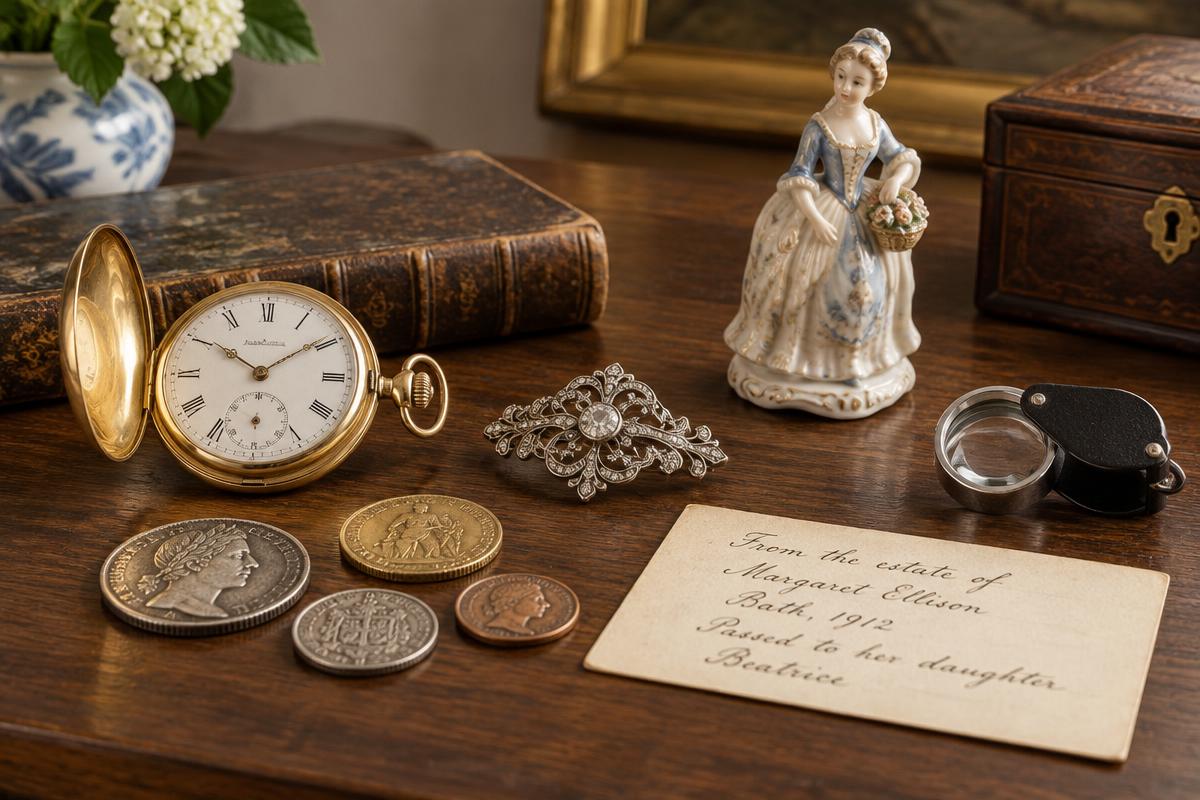
Learn which small antiques may have value, what buyers inspect, how an appraisal works, and how to prepare jewelry, watches, coins and collectibles for sale.
Quick Answer: How Can You Sell Small Antiques for Cash?
To sell small antiques for cash, gather the items without polishing or repairing them, preserve any boxes or paperwork, and take them to an experienced buyer for an in-person evaluation. A buyer should inspect age, maker, materials, condition, rarity, provenance and current demand before explaining an offer.
Small valuables are often overlooked in jewelry boxes, drawers and inherited collections. Antique jewelry, vintage watches, coins, sterling silver pieces and compact collectibles may have value as precious metal, as a collectible, or both.
Golden Jewelers evaluates eligible small antiques alongside gold, jewelry, coins and watches at its Cinnaminson, New Jersey store. Walk-ins from South Jersey and Northeast Philadelphia are welcome, and there is no obligation to accept an offer.
What Counts as a Small Antique?
Small antiques are portable older objects whose materials, craftsmanship, history or scarcity may create resale or collector interest. Age alone does not guarantee value: a common 100-year-old object can be worth less than a scarce 50-year-old piece.
Items that may be worth evaluating include:
- Antique gold and silver jewelry
- Vintage pocket watches and wristwatches
- Old coins, medals and tokens
- Sterling silver flatware and serving pieces
- Small porcelain or bronze figurines
- Decorative boxes, compacts and objets d’art
- Military, civic or historical memorabilia
- Signed or limited-production collectibles
What Determines the Value of a Small Antique?
A professional evaluation considers the whole object rather than relying on age or metal weight alone. A signed antique gold brooch, for example, may be worth more intact than its gold content if its maker, design or period attracts collectors.
- Age and origin — the period and place of manufacture can establish historical context
- Rarity — limited production, unusual variations and low survival rates may increase demand
- Condition — original surfaces, working parts and completeness often matter
- Materials — gold, silver, platinum and gemstones can provide underlying value
- Maker or brand — recognized workshops and designers may command premiums
- Provenance — receipts, boxes or a documented ownership history can support identification
- Market demand — collector interest and comparable sales change over time
How Does a Small-Antique Appraisal Work?
An appraisal begins with identification. The buyer looks for hallmarks, signatures, serial numbers, construction methods and signs of age. Precious-metal items may be tested, watches may be inspected for brand and movement, and coins should be checked for date, mint mark and condition before any metal-only valuation.
The appraisal should separate intrinsic value—the worth of gold, silver or gemstones—from possible estate, designer or collector value. A transparent buyer will explain the factors supporting the offer and let you decide without pressure.
What to Bring to an Evaluation
Bring the object in its current condition together with anything that may help identify it.
- Original boxes, fitted cases or packaging
- Receipts, certificates and prior appraisals
- Family notes or known ownership history
- Detached parts, matching pieces or keys
- Any information about the maker or where the item was acquired
Where Can You Sell Small Antiques?
The best selling option depends on the item. A local buyer can offer a quick, private, face-to-face evaluation. Auction houses may suit rare objects with an established collector market but typically involve commissions and a longer timeline. Online marketplaces expose an item to more buyers, while also requiring photography, pricing, shipping and fraud precautions.
Pawn shops may provide speed but may not specialize in every category. For antique jewelry, watches, coins and sterling pieces, choose a buyer who can evaluate both precious-material value and any collectible qualities.
Golden Jewelers buys eligible small antiques at 141 Route 130 South, Suite H, Cinnaminson, NJ. The store serves customers throughout South Jersey and Northeast Philadelphia and is open seven days a week.
What Types of Small Antiques Can You Sell?
Different categories require different expertise. Do not assume an item is worthless because it is damaged, unfashionable or unfamiliar.
Antique and Estate Jewelry
Gold rings, brooches, necklaces, bracelets and gemstone pieces may be valued for metal, stones, workmanship, maker and period. Signed or unusual pieces should be considered as complete objects before any scrap valuation.
Vintage Watches
Brand, reference, movement, originality, service history and condition can all affect a vintage watch. Bring the box, papers and spare links when available, but an item can still be evaluated without them.
Old Coins and Medals
Date, mint mark, rarity and condition can make a coin worth more than its metal content. Avoid cleaning old coins because abrasion can permanently reduce collector value.
Sterling Silver and Decorative Objects
Flatware, serving pieces, boxes and small decorative objects may carry sterling marks such as 925 or Sterling. Maker, pattern and completeness may matter in addition to silver weight.
Should You Sell an Antique or Keep It?
The right decision depends on both financial and personal value. Keep an item if its family history or sentimental meaning matters more to you than the offer. Selling may make sense when an item is unused, difficult to store, duplicated within an estate or better converted into funds for another priority.
An evaluation does not require a sale. Learning what an item is and why it has value can help you make an informed decision.
Mistakes to Avoid Before Selling Antiques
Preserving an item’s current state is often safer than trying to improve it before an expert sees it.
- Do not aggressively polish coins, silver or original finishes
- Do not discard damaged pieces, single earrings or detached parts
- Do not separate gemstones or melt precious-metal pieces before evaluation
- Do not rely on asking prices alone; they are not confirmed sale prices
- Do not hide repairs or replaced components from the evaluator
- Do not accept an unexplained offer from a buyer you cannot verify
How to Prepare and Get a Stronger Offer
Make a simple inventory and photograph each item before visiting a buyer. Note signatures, hallmarks, engravings, serial numbers and known family history. Keep sets together and bring related documents.
For potentially rare items, comparing qualified opinions can be sensible. The goal is not only to find the highest number, but to understand whether the offer reflects material, resale and collector value.
- Handle items carefully and store small parts together
- Bring original packaging, receipts and certificates
- Separate jewelry, watches, coins and silverware for easier review
- Ask how authenticity, condition and demand affected the offer
- Take time to decide; a legitimate evaluation should not require pressure
How Much Are Small Antiques Worth?
Small-antique values vary widely. Some objects have modest decorative or material value, while a rare coin, signed jewel or collectible watch can be worth substantially more. No responsible buyer can give an exact value from age or a category name alone.
A reliable estimate requires inspection of the specific item. For precious-metal pieces, current market prices may establish a baseline, while maker, rarity, condition and demand can add—or sometimes subtract—value.
Get a No-Obligation Evaluation in Cinnaminson, NJ
If you have inherited or unwanted small antiques, bring them to Golden Jewelers for a private, in-person evaluation. The team can review eligible antique jewelry, watches, coins, sterling silver and other compact valuables, explain what affects the offer and pay cash when you choose to sell.
Golden Jewelers is a family-owned buyer with more than 30 years of experience and over 400 five-star Google reviews. Visit the Cinnaminson store seven days a week—no appointment is needed.
Frequently Asked Questions
What is the easiest way to sell small antiques?
The easiest option is usually an in-person visit to an established local buyer who handles your type of item. Bring the object, related parts and any paperwork so it can be identified and evaluated before you consider an offer.
How do I know whether an old item is valuable?
Look for maker marks, signatures, hallmarks, serial numbers, unusual materials and original packaging. Because age alone does not determine value, professional inspection is the safest way to assess rarity, condition and demand.
Can I sell antique jewelry for cash?
Yes. Antique jewelry may be valued for its precious metal and gemstones as well as its maker, craftsmanship, rarity and period. It should be evaluated intact before being treated only as scrap metal.
Are all old items considered antiques?
No. In many collecting categories, an antique is generally at least 100 years old, while newer objects may be described as vintage. Buyers also consider quality, scarcity and market demand, not only age.
Should I clean an antique before selling it?
Usually not. Harsh cleaners and polishing can remove patina, details or original surfaces and may reduce collector value. Dust gently if necessary, but let an expert advise you before deeper cleaning.
Can damaged or incomplete antiques still have value?
Yes. Precious materials, rare parts, maker, scarcity or restoration potential can retain value even when an item is broken or incomplete. Bring detached pieces and do not attempt unqualified repairs first.
Can an antique be worth more than its gold or silver content?
Yes. A signed, rare or historically important piece may have designer, estate or collector value beyond its precious-metal weight. A qualified buyer should consider the complete item before discussing melt value.
What documents should I bring to an antique appraisal?
Bring receipts, certificates, prior appraisals, original boxes and any reliable ownership history you have. Documentation is helpful but not required for Golden Jewelers to inspect an eligible item.
Where can I sell small antiques in South Jersey?
Golden Jewelers evaluates eligible small antiques at 141 Route 130 South, Suite H, Cinnaminson, NJ. The store serves South Jersey and Northeast Philadelphia, welcomes walk-ins and is open seven days a week.
Do I have to sell after receiving an evaluation?
No. An evaluation and offer do not obligate you to sell. You can ask how the item was assessed and decide whether the offer is right for you.
Ready for a Free, No-Obligation Offer?
Walk in seven days a week at The Shoppes at Cinnaminson — no appointment needed, cash paid on the spot.
