Selling Your Sterling Silver Jewelry for Cash: A Simple Process
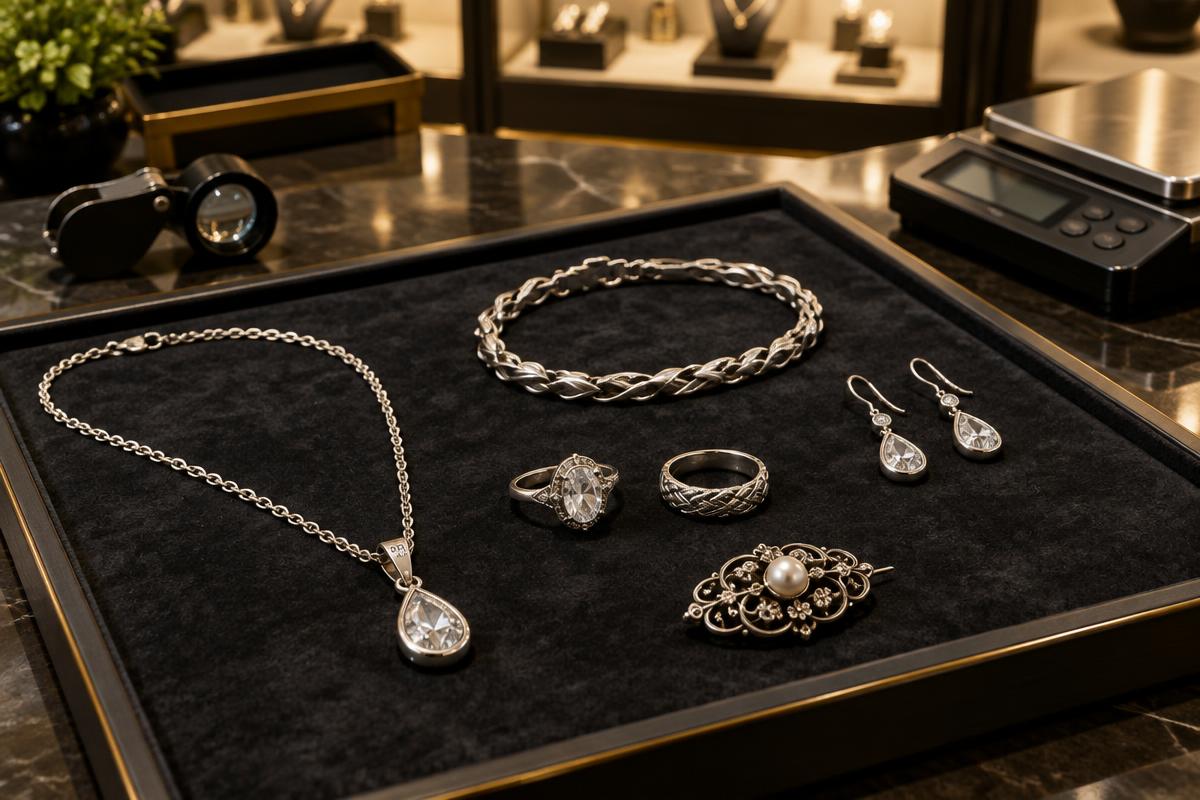
Learn how 925 silver is identified, tested and valued—and what to do with broken jewelry, coins, bullion or collectible pieces before accepting an offer.
Quick Answer: How to Sell Sterling Silver for Cash
To sell sterling silver for cash, gather every piece—even broken or tarnished items—then have a professional buyer verify purity, weigh it accurately and explain how the current silver market affects the offer. Sterling silver is usually marked 925 and contains 92.5% pure silver, but maker, age, condition, gemstones and collectability can add value beyond metal weight.
That old sterling silver necklace, broken bracelet, inherited ring, or collection of silver pieces sitting in your jewelry box may be worth more than you think.
If you want to sell sterling silver, the process does not have to be complicated. A professional buyer can examine your pieces, verify their silver content, weigh them, consider current market conditions, and provide an offer.
The important part is knowing what you own and choosing a buyer who clearly explains how the value is determined.
Golden Jewelers provides professional cash for jewelry services for customers looking to sell silver jewelry and other valuables in South New Jersey and the Philadelphia area. The evaluation process considers factors such as purity, weight, condition, and current precious-metal market values.
This guide explains how selling silver for cash works, what determines silver jewelry value, how to prepare for an appraisal, and what you should know before accepting an offer.
What Is Sterling Silver?
Sterling silver is a silver alloy containing 92.5% pure silver, with the remaining 7.5% generally consisting of another metal used to improve durability.
According to the Federal Trade Commission's guidance on silver jewelry, the terms "silver," "sterling," and "sterling silver" describe products containing 92.5% pure silver. Sterling pieces are also commonly marked 925, indicating 925 parts of silver per thousand.
This distinction matters when selling because sterling silver contains substantially more valuable silver than a silver-plated item.
Common sterling silver pieces include:
If you also have forks, spoons, serving pieces, trays, or similar household items, they may fall under sterling silverware rather than jewelry, but they can still be evaluated for their silver content.
- Rings
- Necklaces and chains
- Bracelets
- Earrings
- Brooches
- Pendants
- Antique jewelry
- Sterling flatware
- Serving pieces
- Decorative silver items
How Can You Tell If Jewelry Is Sterling Silver?
One of the easiest first steps is to look for a hallmark.
Common markings include:
A "925" mark generally indicates that the item is 92.5% silver.
However, a stamp alone should not be treated as absolute proof of authenticity. Older, imported, altered, or counterfeit pieces may require professional testing.
- 925
- .925
- Sterling
- Sterling Silver
- Ster.
Sterling Silver vs. Silver-Plated Jewelry
The difference can have a major impact on value.
If you cannot determine which type you have, avoid guessing. Let an experienced buyer test the item.
- Silver content — Sterling Silver: 92.5% silver; Silver-Plated Jewelry: Thin silver coating over base metal
- Common marking — Sterling Silver: 925 or Sterling; Silver-Plated Jewelry: Varies
- Precious-metal value — Sterling Silver: Generally higher; Silver-Plated Jewelry: Usually much lower
- Appraisal focus — Sterling Silver: Purity, weight and resale factors; Silver-Plated Jewelry: Limited silver content
- Suitable for metal-value sale — Sterling Silver: Yes; Silver-Plated Jewelry: Depends on buyer
How Does Selling Sterling Silver for Cash Work?
For most sellers, the process can be summarized in four steps: bring your items, have them evaluated, receive an offer, and decide whether to sell.
Here's what happens in more detail.
Step 1: Gather All the Silver You Want Evaluated
Start by checking jewelry boxes, drawers, safes, inherited collections, and storage containers.
Bring items even if they are:
A broken chain may no longer have much value as wearable jewelry, but the silver itself can still have value.
Do not automatically discard an item simply because it is damaged.
- Broken
- Tarnished
- Missing stones
- Out of style
- Single earrings
- Damaged
- Unwanted
- Part of an inherited collection
Step 2: Separate Jewelry, Coins, Bullion, and Silverware
Different silver items can require different valuation approaches.
For example, ordinary sterling jewelry may primarily be evaluated based on purity, weight, condition, and resale potential. A rare coin, however, may have collectible value in addition to its silver content.
If you have silver dollars, collectible coins, or inherited coin collections, have them evaluated by experienced silver coin buyers before assuming they are only worth their metal content.
Likewise, silver bars and investment-grade products should be evaluated separately through a professional cash for silver bullion service.
Step 3: Get a Sterling Silver Appraisal
During a sterling silver appraisal, the buyer determines what the item is and what factors contribute to its value.
A professional evaluation may consider:
The process is important because two pieces of the same weight do not necessarily have the same market value.
- Silver purity
- Total weight
- Current silver market conditions
- Condition
- Brand or maker
- Age and rarity
- Gemstones or other valuable components
- Potential resale or collectible value
Step 4: Review the Offer Before Selling
After the evaluation, the buyer provides an offer.
A transparent buyer should be willing to explain what factors affected the valuation.
You can then decide whether you want to accept the offer.
Golden Jewelers' silver jewelry buying service evaluates silver pieces and other jewelry, with walk-in evaluations available without requiring an appointment.
How Is Sterling Silver Jewelry Value Calculated?
There is no single fixed price for every sterling silver item.
The silver jewelry value generally depends on several interconnected factors.
- Purity — Why It Matters: Determines how much actual silver is present
- Weight — Why It Matters: Heavier sterling pieces contain more silver
- Silver market price — Why It Matters: Influences the underlying metal value
- Condition — Why It Matters: Can affect resale potential
- Maker or brand — Why It Matters: Recognized pieces may command additional value
- Age and rarity — Why It Matters: Certain antique pieces may have collector appeal
- Gemstones — Why It Matters: Genuine stones may contribute separate value
- Craftsmanship — Why It Matters: Special designs may be worth more than melt value
Purity
Sterling silver is typically 92.5% pure silver.
That means a 100-gram sterling item is not 100 grams of pure silver. Its theoretical silver content is approximately 92.5 grams before considering other valuation factors.
Weight
Weight is particularly important when an item is primarily being valued for precious-metal content.
All else being equal, a heavier sterling piece contains more silver than a lighter piece of the same purity.
Current Silver Price
Silver is a globally traded precious metal, so its market value changes.
Professional precious-metal buyers monitor market conditions when determining offers. One recognized industry benchmark is the LBMA Silver Price.
However, the headline market price should not be confused with the amount a buyer will pay for your jewelry. A buyer's offer can differ because of purity, refining requirements, resale potential, operating costs, and other factors.
How Much Cash Can You Get for Sterling Silver?
The amount you can receive depends on what you are selling.
There is no responsible way to quote an exact amount without examining the item and considering current market conditions.
For example, imagine two people each have a 50-gram silver-colored bracelet.
The first bracelet is verified as sterling silver and marked 925.
The second is silver plated over a base metal.
Although both pieces look similar and weigh the same, their precious-metal values can be dramatically different because the first contains substantial silver while the second may contain only a thin silver coating.
This is why professional testing is more useful than estimating value based on appearance alone.
Is Sterling Silver Worth More Than Its Melt Value?
Sometimes.
A basic or damaged sterling item may be valued primarily according to its precious-metal content. Other pieces can have value beyond their silver weight.
Examples include:
Before selling an unusual or potentially collectible item purely for scrap value, ask whether it has additional resale or collector value.
This is particularly important with inherited collections and antiques. Golden Jewelers also evaluates certain small antiques and vintage jewelry, allowing potentially collectible pieces to be considered beyond basic metal content.
- Recognized designer jewelry
- Antique jewelry
- Signed pieces
- Rare designs
- Historically interesting items
- Jewelry containing valuable gemstones
- Collectible silver objects
Can You Sell Broken Sterling Silver Jewelry?
Yes. Broken sterling silver can still have value because damage does not eliminate the silver contained in the item.
Potentially sellable pieces include:
If the piece cannot realistically be resold as jewelry, its silver content may still make it valuable to a precious-metal buyer.
This is one reason you should not throw away damaged precious-metal jewelry before having it checked.
- Broken chains
- Bent rings
- Damaged bracelets
- Single earrings
- Jewelry with missing stones
- Tarnished pieces
- Unwanted or outdated jewelry
Should You Clean Sterling Silver Before Selling It?
Usually, extensive cleaning is unnecessary.
Sterling silver naturally tarnishes as it reacts with substances in the environment. Tarnish does not automatically mean the underlying silver has lost its precious-metal value.
Aggressive polishing may also be undesirable for antique or collectible pieces because original finishes, patina, maker marks, and surface details can matter.
A safer approach is to leave potentially valuable pieces largely as they are and allow the buyer to examine them first.
What Is the Difference Between Selling Silver Jewelry, Coins, and Bullion?
Although all three categories may contain silver, they should not automatically be valued in the same way.
For example, an ordinary silver coin may be valued mainly for metal content, while a rare coin could command a collector premium.
If you have Morgan Dollars, Silver Eagles, rare coins, foreign coins, or inherited collections, professional coin buyers can evaluate both their precious-metal and potential numismatic value.
For bars, rounds, and other investment silver, a silver bullion appraisal can focus on purity, weight, condition, and prevailing silver market conditions.
- Sterling jewelry — Primary Valuation Factors: Purity, weight, condition; Possible Extra Value: Brand, design, gemstones
- Silver coins — Primary Valuation Factors: Metal content, authenticity; Possible Extra Value: Rarity, date, mint, condition
- Silver bullion — Primary Valuation Factors: Weight, purity, market price; Possible Extra Value: Product or mint premium
- Sterling silverware — Primary Valuation Factors: Purity and weight; Possible Extra Value: Maker, age, pattern, collectability
What Should You Bring to a Sterling Silver Appraisal?
You generally do not need complicated preparation.
Bring the silver items themselves along with any documentation that may help identify unusual pieces.
Useful materials can include:
Do not worry if you do not have paperwork. Many pieces can still be professionally evaluated.
- Original receipts
- Previous appraisals
- Certificates
- Designer packaging
- Documentation about gemstones
- Coin holders or original packaging
- Information about inherited collections
What Are the Most Common Mistakes When Selling Silver?
Mistake 1: Assuming Every Silver-Colored Item Is Sterling
Appearance alone cannot confirm silver purity.
Look for hallmarks, but rely on professional testing when necessary.
Mistake 2: Assuming the Spot Price Equals Your Cash Offer
The market price of pure silver is a reference point, not automatically the amount you receive for sterling jewelry.
Sterling is not pure silver, and buyers must account for purity, processing, resale conditions, and other costs.
Mistake 3: Selling a Collectible Piece Only for Metal Value
Some designer, antique, or rare pieces may be worth more intact.
Ask whether the item has resale or collectible value before treating it as scrap.
Mistake 4: Throwing Away Broken Jewelry
Broken jewelry can still contain valuable precious metal.
Keep damaged sterling pieces and have them evaluated.
Mistake 5: Aggressively Polishing Antique Silver
Heavy polishing can alter the surface of an older piece.
Have potentially collectible silver evaluated before attempting restoration.
Mistake 6: Mixing Rare Coins With Scrap Silver
A collectible coin should not automatically be treated like scrap metal.
Separate coins from ordinary jewelry and request an appropriate evaluation.
How Can You Choose Reliable Silver Jewelry Buyers?
The best silver jewelry buyers should provide a process you can understand.
Before selling, consider whether the buyer:
Transparency matters because sellers should understand what they are being paid for.
For people searching for cash for silver in NJ, Golden Jewelers is a family-owned jewelry and precious-metal buyer in Cinnaminson, New Jersey, serving customers throughout New Jersey and nearby Pennsylvania. You can visit the Cinnaminson jewelry buyer for an in-person evaluation.
- Tests your items professionally
- Explains how purity affects value
- Uses accurate weighing equipment
- Considers current market conditions
- Identifies potentially collectible pieces
- Provides a clear offer
- Allows you to decline the offer
- Has an established local reputation
Expert Tips Before Selling Sterling Silver for Cash
A few simple steps can help you approach the sale more confidently.
Check the hallmarks first. Separate items marked 925 or Sterling from obviously plated pieces, but remember that professional verification may still be necessary.
Do not discard damaged pieces. Precious-metal content can remain valuable even when jewelry is broken.
Separate coins and bullion. Their valuation can differ significantly from ordinary jewelry.
Keep potentially collectible pieces intact. Avoid unnecessary cleaning, stone removal, or modification before appraisal.
Understand market pricing. Checking a recognized silver benchmark can give you useful context, but do not assume spot price and buyer payout are identical.
Ask questions during the appraisal. A professional buyer should be able to explain the major factors influencing your offer.
Why Sell Sterling Silver Locally in New Jersey?
Selling locally allows you to have your items physically examined and discuss the valuation directly with the buyer.
For customers looking for cash for silver NJ, Golden Jewelers buys silver and other valuables at its Cinnaminson location and serves customers from South New Jersey and the Philadelphia area.
In addition to silver, the business purchases jewelry, coins, diamonds, watches, estate pieces, and other precious metals. Customers with mixed collections can therefore have several types of valuables evaluated during the same visit through Golden Jewelers' cash for jewelry service.
Ready to Turn Your Sterling Silver Into Cash?
Selling unwanted silver does not need to be confusing.
Start by gathering your jewelry, checking for sterling marks, separating coins and bullion, and having your items professionally evaluated. Most importantly, choose a buyer who explains how purity, weight, market conditions, and potential collectible value affect the offer.
If you're ready to sell sterling silver in New Jersey, Golden Jewelers provides professional cash for sterling silver and jewelry evaluations at its Cinnaminson location.
Have old flatware or serving pieces as well? You can also receive an evaluation through Golden Jewelers' cash for sterling silverware service.
Bring your unwanted silver to Golden Jewelers for a free, no-obligation evaluation and find out what your pieces are worth.
Frequently Asked Questions
Where can I sell sterling silver for cash?
You can sell sterling silver to established jewelry buyers and precious-metal dealers that evaluate purity, weight, current silver prices, and any additional resale or collectible value. In South New Jersey, Golden Jewelers provides in-person silver and jewelry evaluations.
How do I know whether my jewelry is real sterling silver?
Look for marks such as 925, .925, Sterling, or Ster. A 925 marking typically indicates 92.5% silver, but professional testing provides greater confidence when authenticity is uncertain.
Is 925 silver the same as sterling silver?
Yes. Sterling silver is generally 92.5% pure silver, and "925" represents 925 parts of silver per 1,000.
How much is sterling silver worth per gram?
There is no fixed permanent value per gram because silver market prices fluctuate. The value of a sterling item also depends on its 92.5% silver purity, weight, condition, and potential resale or collectible value.
Can I sell tarnished sterling silver?
Yes. Tarnish does not remove the underlying silver content. A professional buyer can evaluate tarnished sterling pieces without requiring you to heavily polish them first.
Can I sell broken sterling silver jewelry?
Yes. Broken chains, bent rings, damaged bracelets, single earrings, and other sterling pieces can retain value because they still contain silver.
Should I clean my sterling silver before an appraisal?
Extensive cleaning is generally unnecessary. Avoid aggressive polishing of antique or potentially collectible pieces because their original finish and surface details may matter.
Are silver coins worth more than sterling silver jewelry?
It depends. Some silver coins are primarily valuable for their metal content, while rare coins may carry substantial numismatic value. Coins should therefore be evaluated separately from ordinary sterling jewelry.
What affects the cash offer for sterling silver?
The main factors include silver purity, weight, current market conditions, condition, brand, craftsmanship, gemstones, rarity, and potential resale value.
Do I need an appointment to sell silver at Golden Jewelers?
No. Golden Jewelers accepts walk-ins at its Cinnaminson location, so customers can bring eligible silver, jewelry, coins, and other valuables for evaluation without an appointment.
Ready for a Free, No-Obligation Offer?
Walk in seven days a week at The Shoppes at Cinnaminson — no appointment needed, cash paid on the spot.
